Introduced in NCC 2022, Clause 10.8.3 forms a critical part of the new Condensation Management provisions in Volume Two. Its aim is simple: improve the durability, energy efficiency and indoor air quality of Australian homes by ensuring roof spaces are properly ventilated.
Modern construction techniques create more airtight, thermally efficient homes. That's great for comfort and running costs — but it also increases the risk of trapped moisture in the building envelope. In the roof space, heat, humidity and poor air movement can quickly lead to condensation, mould and premature material failure.
What the clause actually requires
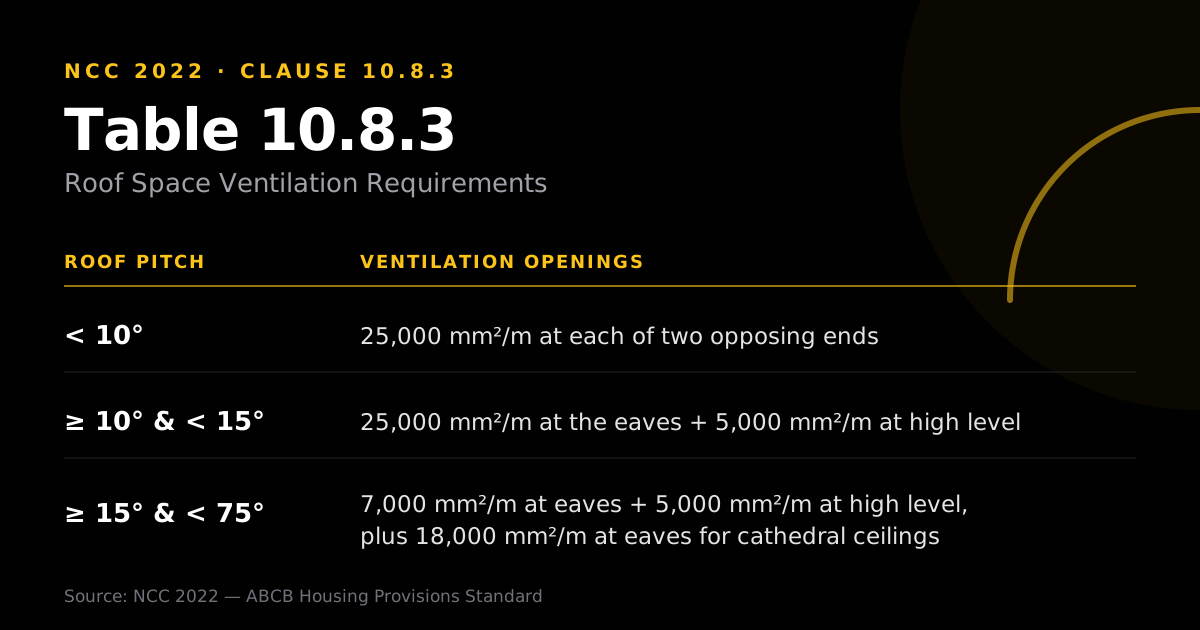
In Climate Zones 6, 7 and 8, a roof space must be ventilated to outdoor air through evenly distributed openings in accordance with Table 10.8.3. The required free open area is set per metre of the roof's longest horizontal dimension, and varies by roof pitch:
| Roof pitch | Ventilation openings |
|---|---|
| < 10° | 25,000 mm²/m provided at each of two opposing ends |
| ≥ 10° and < 15° | 25,000 mm²/m at the eaves and 5,000 mm²/m at high level |
| ≥ 15° and < 75° | 7,000 mm²/m at the eaves and 5,000 mm²/m at high level, plus an additional 18,000 mm²/m at the eaves if the roof has a cathedral ceiling |
Openings are a minimum free open area per metre of the roof's longest horizontal dimension. High-level openings are at the ridge or no more than 900 mm below it. Source: NCC 2022 / ABCB Housing Provisions Standard.
Where solar ventilation comes in
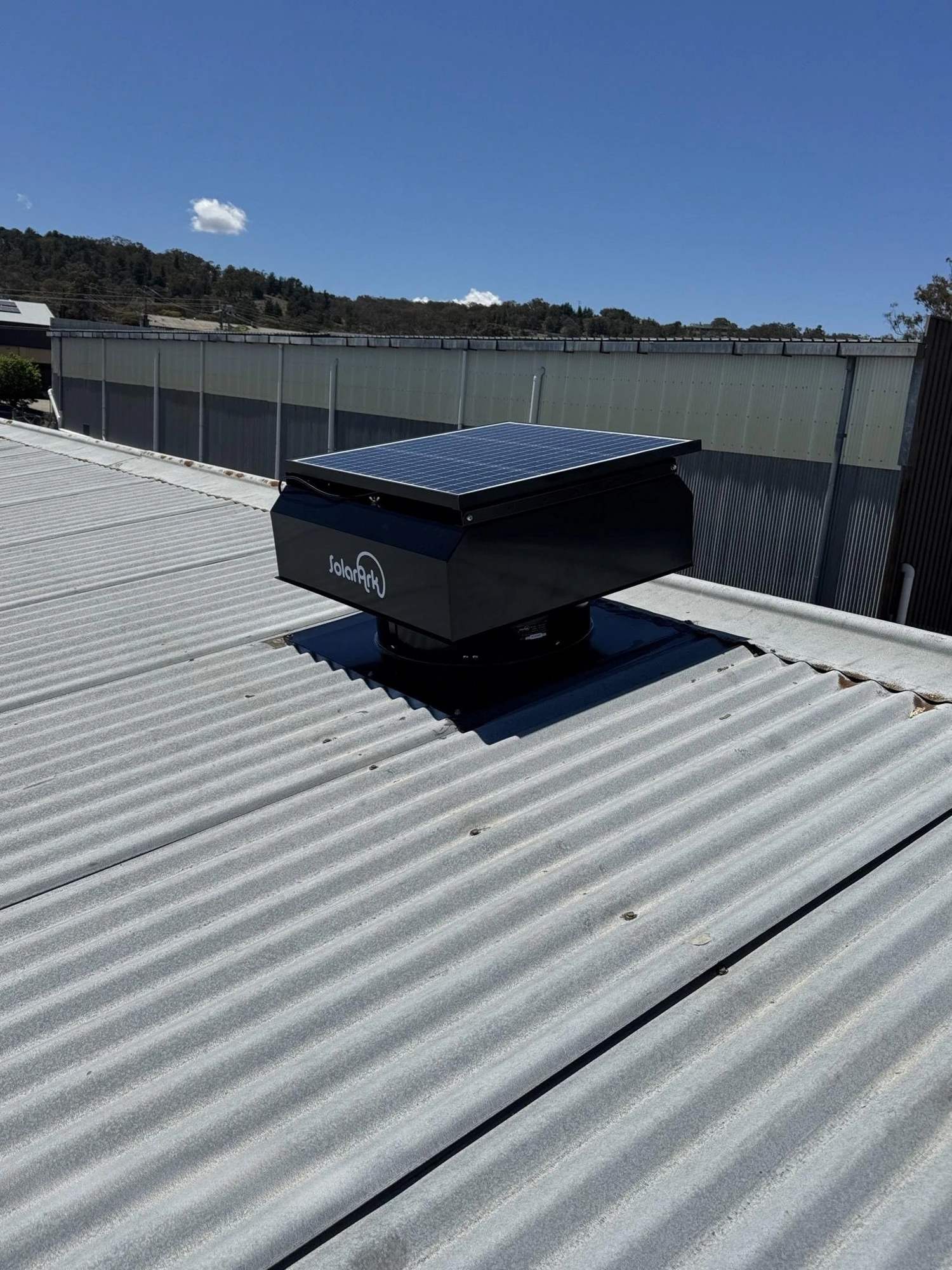
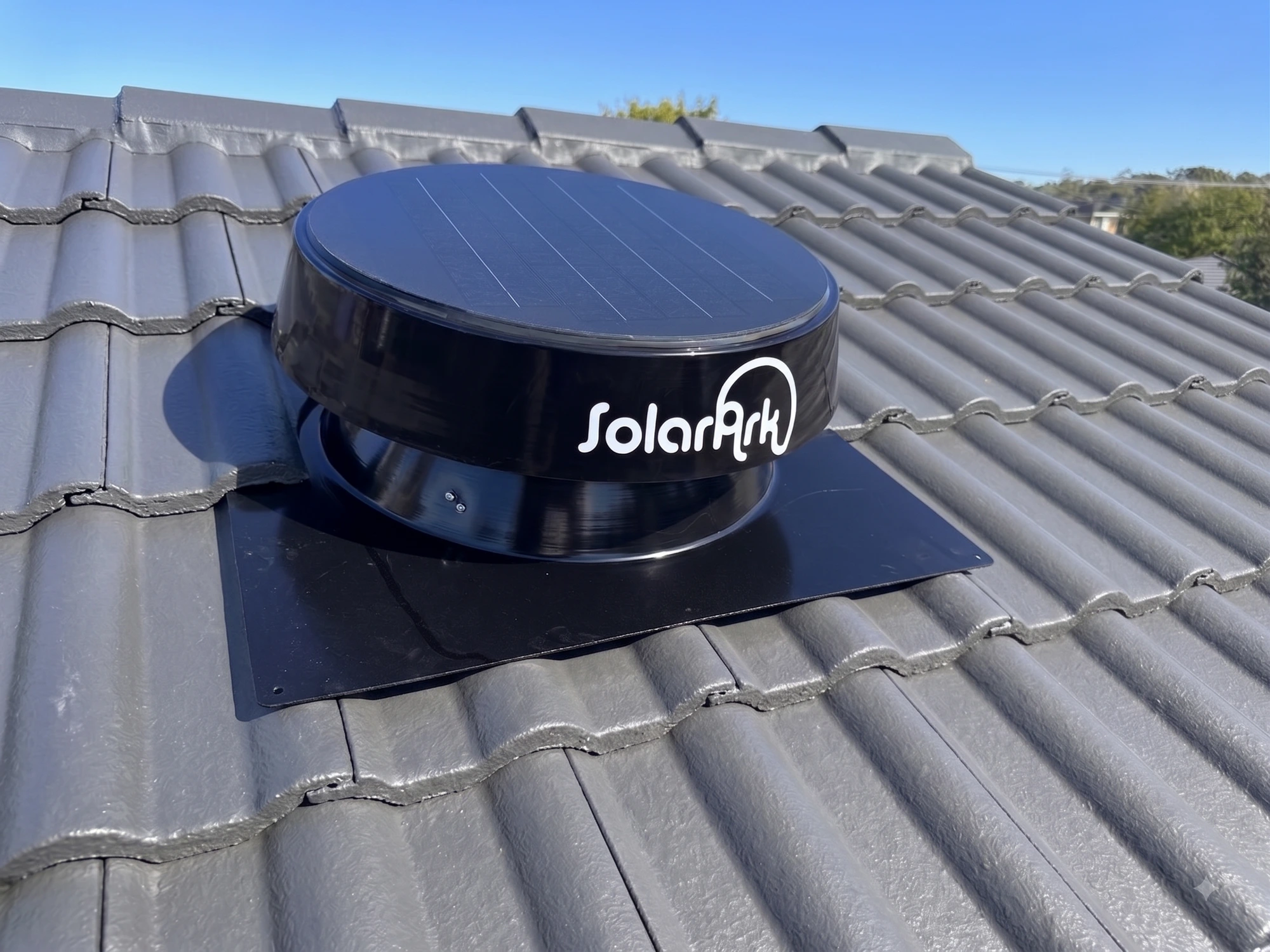
A passive vent only moves air when conditions allow. A SolarArk solar ventilator actively drives continuous convective air exchange whenever the sun is out — delivering sustained ventilation rates that meet and exceed the Deemed-to-Satisfy provisions, particularly in Climate Zones 6, 7 and 8.
Because free open area is measured at a completely unobstructed base opening, a single SAV-20 delivers 196,349 mm² of effective airflow — far beyond a traditional whirlybird. For the full method and worked examples, see our NCC 10.8.3 page.